South Dakota Mines Scientists Linked to IceCube Neutrino Research
A Nobel Prize-winning discovery related to the IceCube Neutrino Observatory in Antarctica, which studies high-energy neutrinos from space, is highlighting the involvement of scientists from South Dakota Mines in this deep-space research.

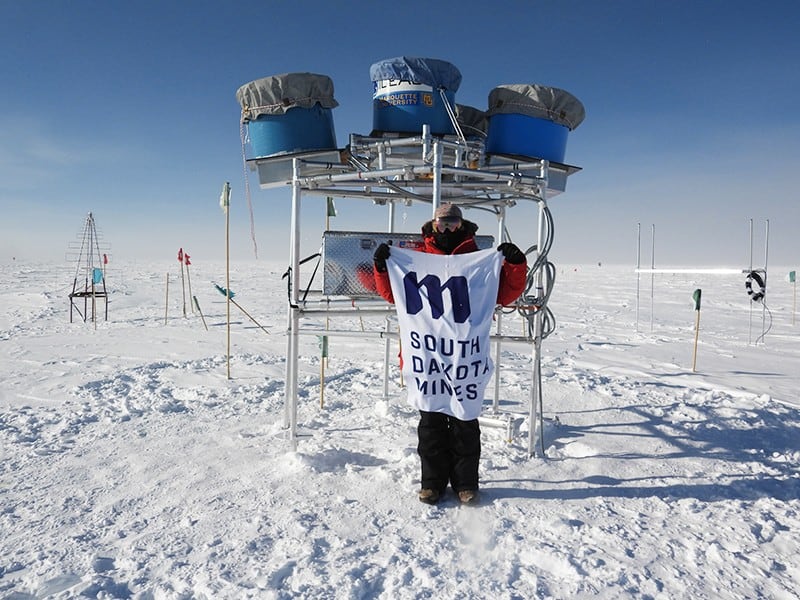
 Rapid City, SD, October 25, 2026 —
A Nobel Prize-winning discovery related to the IceCube Neutrino Observatory is drawing attention to the participation of scientists from South Dakota Mines in research on high-energy neutrinos from space.
IceCube is located in Antarctica and studies these particles, according to the information provided. The discovery’s connection to the observatory has put a spotlight on the work of South Dakota Mines scientists in the broader field of deep-space research.
The available information does not identify the discovery, the Nobel Prize category or year, or the scientists who received the award. It also does not name the South Dakota Mines researchers or describe their specific contributions. The nature of the connection between the prize-winning discovery and the university’s work was not provided, so the researchers’ involvement should not be taken to mean they were Nobel laureates or that the university received the award.
No details were provided about when the South Dakota Mines scientists became involved, what projects they worked on, or what findings they contributed. The information also does not specify whether their work was directly part of the discovery recognized by the Nobel Prize or related to IceCube research more generally.
What is established in the summary is the broad connection: a Nobel Prize-winning discovery is related to IceCube, and scientists from South Dakota Mines have been involved in the observatory’s deep-space research. Further details about the award, the discovery and the researchers’ roles were not included.
Story summarized from the original created by Mary Francis Witte on www.kotatv.com, see more information here.
Media gallery