
Malecha’s North End Detailing and Accessories Shares Consumer Guidance on Vehicle Upholstery Stains
Faribault, MN - November 11, 2026 - PRESSADVANTAGE - Malecha’s North End Detailing and Accessories is sharing seasonal
Press Release Disclaimer: This is a press release distributed through the XPR Media network. It has not been independently verified by our newsroom.

Faribault, MN – November 11, 2026 – PRESSADVANTAGE –
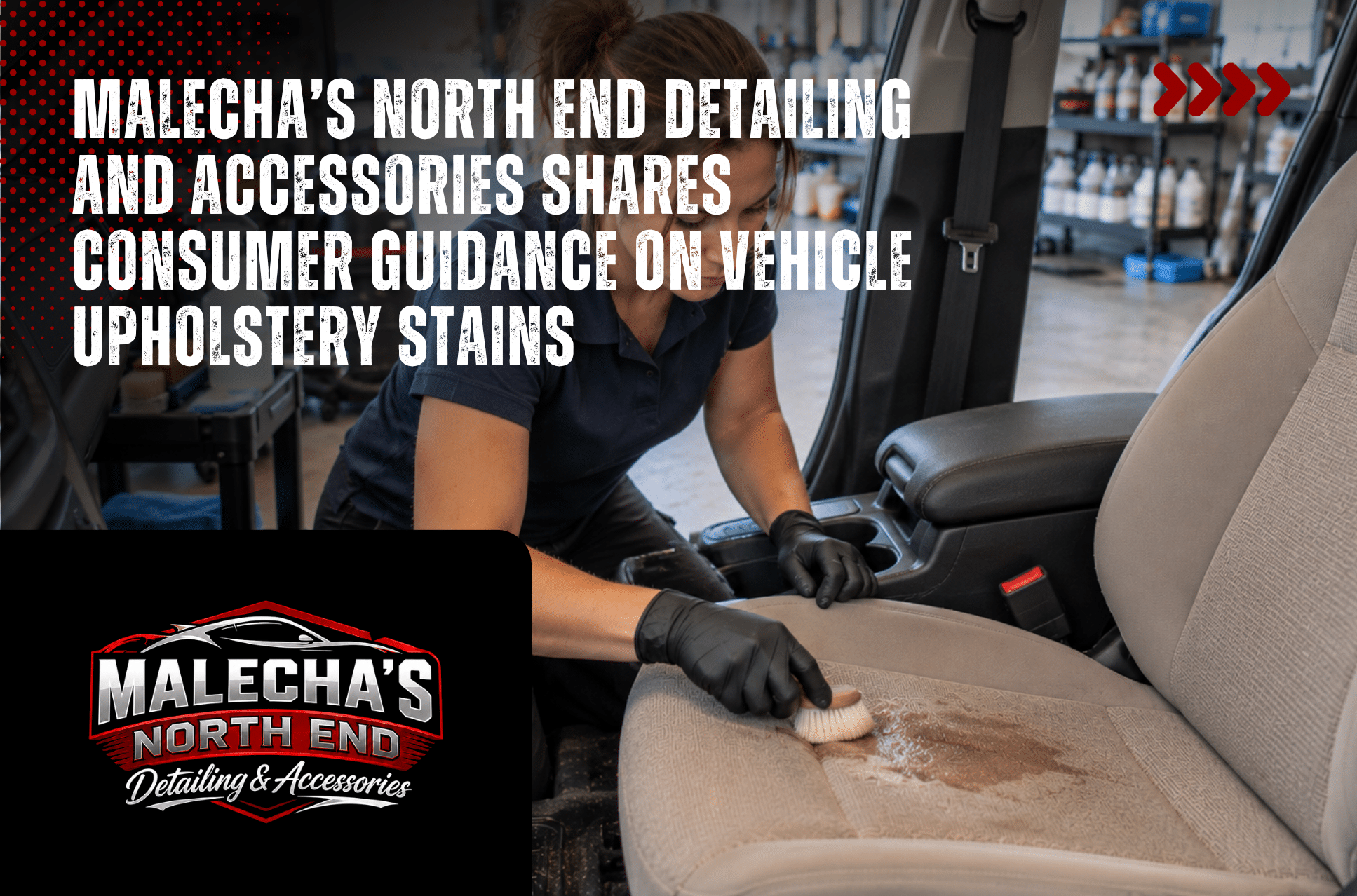
Malecha’s North End Detailing and Accessories is sharing seasonal consumer guidance on vehicle upholstery stains as colder driving conditions increase exposure to road salt, moisture, and tracked-in debris. The guidance outlines common causes of interior staining, explains how different upholstery materials respond to contamination, and identifies cleaning practices that may help vehicle owners avoid unnecessary surface damage.
Winter conditions introduce particular challenges for vehicle interiors. Road salt and moisture carried inside on footwear can accumulate on carpeting, floor mats, and lower upholstery surfaces. As moisture evaporates, mineral deposits may leave visible residue that requires different treatment from ordinary dirt or dust.
These conditions make it important to identify the type of contamination before selecting a cleaning method. Road salt residue, beverage spills, food stains, and transferred dyes can affect upholstery differently. A cleaning approach suitable for one material may be ineffective or unsuitable for another.
For example, a fresh beverage spill on a cloth seat may remain near the surface, while an older spill can penetrate deeper into the upholstery or padding. Similarly, white residue on carpeting may result from deposited road salt rather than permanent discoloration. Understanding these differences can help determine whether routine cleaning or more focused treatment is appropriate.
Malecha’s North End Detailing and Accessories provides professional auto detailing services that include vehicle interior cleaning and appearance maintenance. Cleaning requirements depend on the material, the source of contamination, and the condition of the affected surface.
Cloth upholstery and carpeting can absorb liquids and retain fine particles within their fibers. Removing loose debris may improve the surface appearance, but embedded residue can require additional cleaning. Excessive moisture during treatment may spread contamination or affect underlying padding.
Leather and coated upholstery require different considerations. Body oils, transferred dyes, and unsuitable cleaning products can affect surface finishes. Abrasive scrubbing or chemicals that are not compatible with the material may alter its appearance or damage protective coatings.
Vehicle interiors may also contain several materials within the same seating area. Cloth inserts, synthetic side panels, leather surfaces, and plastic trim can require different cleaning products and techniques. Following applicable manufacturer care instructions helps reduce the risk of using unsuitable treatments.
Road salt contamination is particularly relevant during winter vehicle maintenance. Moisture can carry deicing residue into carpeting, where visible deposits may remain after the area dries. Cleaning should account for the material involved and the amount of residue present rather than relying solely on surface vacuuming.
Food and beverage spills present separate challenges. Coffee, soda, sauces, and similar substances may contain sugars, oils, or coloring agents that leave residue. The age of the stain, previous cleaning attempts, and upholstery construction can influence the available treatment options.
For minor spills, vehicle owners can begin by removing loose material and gently blotting excess liquid with a clean, absorbent cloth. Rubbing the affected area or applying unfamiliar household cleaners may spread the stain or affect sensitive surfaces.
Further cleaning should follow the vehicle manufacturer’s applicable care instructions and the product manufacturer’s directions for material compatibility. Testing an approved product in an inconspicuous area, when directed, may help identify potential changes in appearance before broader application.
Not every upholstery stain can be completely removed. Permanent dye transfer, chemical discoloration, material deterioration, and deeply embedded contamination may remain visible after cleaning. Distinguishing removable residue from lasting material changes is important when evaluating treatment options.
Odors can also accompany upholstery contamination. Spilled liquids and trapped moisture may reach padding or surrounding interior materials. Cleaning the visible surface alone may not address the source when contamination extends beneath the upholstery.
Vehicle owners considering professional interior cleaning can provide useful information by identifying the likely source of the stain, how long it has been present, and any cleaning products previously applied. These details can help a detailing provider assess the affected area and explain realistic treatment expectations.
Additional information about Malecha’s North End Detailing and Accessories is available through its About page. The company’s consumer guidance emphasizes careful evaluation of upholstery conditions before attempting aggressive cleaning, particularly when delicate materials or older stains are involved.
Routine interior maintenance can help limit contamination. Removing loose debris, maintaining floor mats, and addressing fresh spills promptly may reduce the amount of residue that remains in contact with vehicle surfaces.
However, routine cleaning cannot prevent every stain or reverse all forms of material damage. The appropriate approach depends on the affected surface, the type of contamination, and the extent of any existing deterioration.
The seasonal guidance highlights three considerations for vehicle owners preparing to address upholstery stains: identifying the affected material, determining the likely source and age of the contamination, and reviewing previous cleaning attempts.
These considerations are especially useful during periods when road salt, moisture, and debris are more likely to enter vehicle interiors. Understanding the differences between surface residue, embedded contamination, and permanent discoloration can help owners select appropriate maintenance methods.
Information about vehicle detailing and appearance maintenance services is available through the company’s Faribault service area page.
Malecha’s North End Detailing and Accessories emphasizes that effective upholstery care depends on matching cleaning methods to the material and contamination involved. Recognizing the limitations of stain removal and following appropriate care instructions can help vehicle owners make informed decisions about interior maintenance and professional detailing.
About Malecha’s North End Detailing and Accessories
Malecha’s North End Detailing and Accessories is a locally owned automotive detailing and vehicle appearance protection business serving Faribault, Minnesota, and surrounding communities. The company provides professional auto detailing, automotive window tinting, paint protection film, ceramic coating, new vehicle protection, and residential and commercial window tinting services. Its services focus on vehicle appearance, interior maintenance, and surface protection options for local drivers.
###
For more information about Malecha’s North End Detailing and Accessories, contact the company here:
Malecha’s North End Detailing and Accessories
William Malecha
(507) 384-1299
WilliamMalecha@gmail.com
190 20th St NW, Faribault, MN 55021 (Suite B)
